

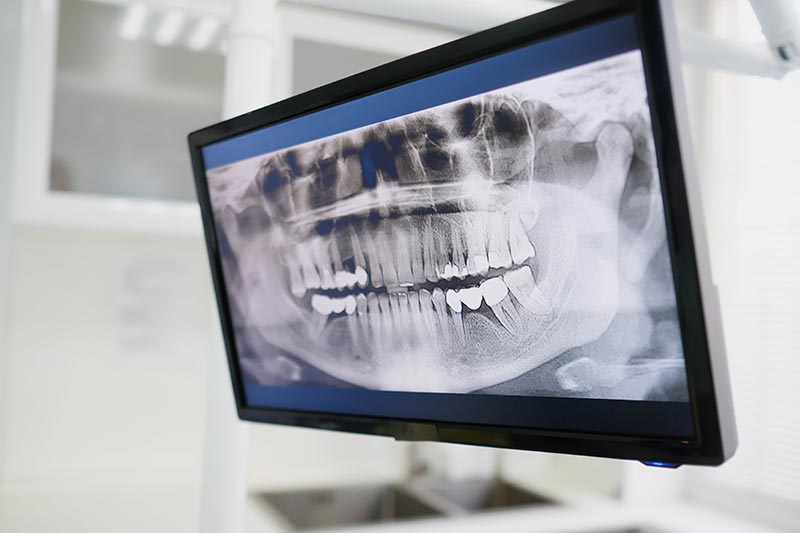
If you've ever wondered why your dentist recommends dental X-rays, you're not alone. After all, your dentist can see your teeth during an examination, so why are X-rays necessary?
The answer is simple: some of the most important areas of your smile can't be seen during a visual examination alone.
Dental X-rays give your dentist a closer look at what's happening beneath the surface, between teeth, and around the roots and supporting bone. At Warren & Hagerman Family Dentistry, we use diagnostic technology as part of a comprehensive approach to dental care, helping us identify concerns early and create personalized treatment plans for patients of all ages.
What Can Dental X-Rays Detect?
Dental X-rays can reveal problems that may not yet cause pain or other noticeable symptoms. Depending on the type of X-ray taken, your dentist may be able to evaluate:
- Cavities between teeth
- Tooth decay beneath existing restorations
- The roots and surrounding bone
- Developing and impacted teeth
- Bone loss associated with gum disease
- Dental infections or abscesses
- Changes around existing dental work
- Cysts or other abnormalities
- The position and development of children's permanent teeth
This is one reason regular dental examinations are so important. A tooth can have a problem before you feel anything is wrong.
How Often Do You Need Dental X-Rays?
There isn't a single X-ray schedule that applies to every patient.
Your dentist considers your individual oral health, age, dental history, risk for tooth decay, gum health, symptoms, and previous X-rays when determining whether new images are needed.
For example, someone with a history of frequent cavities may need X-rays more often than someone with consistently good oral health and a low risk of decay. Children and teenagers may also need different imaging schedules because their teeth and jaws are still developing.
If you are experiencing dental pain, swelling, an injury, or another concerning symptom, your dentist may recommend an X-ray regardless of when your last images were taken.
In other words, dental X-rays aren't necessarily something you need at every appointment. They are recommended when the diagnostic information they provide can help your dentist evaluate your oral health or make informed treatment decisions.
Why a Visual Dental Exam Isn’t Enough
A visual dental examination is an important part of every checkup, but it has limitations.
Some cavities develop in areas that are difficult to see, particularly between teeth. X-rays can allow your dentist to identify these areas before they become more extensive.
X-rays can also show what's happening beneath the visible surface of your teeth and around the roots and jawbone. This additional information helps your dental team develop a more complete picture of your oral health.
Think of an X-ray as another tool that works alongside your clinical examination rather than replacing it.
Are Dental X-Rays Safe?
Modern dental X-ray technology uses very small amounts of radiation. Your dental team also follows appropriate safety practices and only recommends X-rays when they are clinically useful.
At Warren & Hagerman Family Dentistry, advanced technology is part of our commitment to providing excellent, personalized care. Diagnostic tools such as dental X-rays help our team detect potential concerns and make informed recommendations based on what's happening inside your mouth—not just what we can see on the surface.
What About Children's Dental X-Rays?
Dental X-rays can be particularly valuable for children because their mouths are constantly changing. As permanent teeth develop and move into position, X-rays can help your dentist monitor their growth and identify potential concerns.
For example, X-rays may help your child's dentist evaluate:
- How permanent teeth are developing
- Whether teeth are erupting properly
- The position of teeth that have not yet erupted
- Cavities that aren't visible during a regular examination
- The development of the jaw and supporting structures
Because children are still developing, their dental needs can change quickly. Your dentist will recommend imaging based on your child's individual needs rather than following a one-size-fits-all schedule.
Dental X-Rays Are About Prevention
One of the biggest benefits of dental X-rays is that they can help your dentist find problems earlier.
Early detection can sometimes mean a simpler, more conservative treatment. A small cavity caught between two teeth, for example, may be much easier to address than decay that has progressed into the deeper layers of the tooth.
That's why preventive dentistry isn't simply about cleaning your teeth. It's about using examinations, X-rays, and other diagnostic tools to understand what's happening with your oral health and address concerns before they become more serious.
Trust Your Dentist to Recommend the Right Timing
If you're wondering whether it's time for another dental X-ray, the best answer will depend on you. Your dentist can review your dental history, current oral health, risk factors, and previous images to determine when updated X-rays are appropriate.
At Warren & Hagerman Family Dentistry, we proudly provide comprehensive dental care for children, teens, adults, and seniors throughout Litchfield Park and the West Valley. Our family-oriented team combines compassionate care with advanced technology to help every member of your family enjoy a healthy smile.
If you're due for a dental checkup or have questions about your dental X-ray schedule, contact Warren & Hagerman Family Dentistry in Litchfield Park, AZ, to schedule your next visit.


